[align=center]

The star-nosed mole's snout has 22 fleshy tentacles that are used to identify food by touch. Often found in North America, it lives in wet lowland areas and eats small invertebrates, aquatic insects, worms and molluscs

The Hispaniolan solenodon, a strange looking shrew-like creature with a long snout and specialised teeth capable of delivering venom. Only two solenodon species exist today, one in Haiti and the Dominican Republic, and the other in Cuba

The blobfish is a gelatinous mass with a density slightly less than that of the water it occupies. This helps it maintain buoyancy. Hovering just above the sea-floor, the blobfish gobbles edible matter that floats past it

The long eared jerboa is a nocturnal mouse-like rodent found in the deserts of China and Mongolia. It has a long tail, long legs and extremely large ears. Being such a rare creature, it is in danger of extinction

The aye-aye shares a lot in common with the woodpecker - it taps trees to find grubs. When food is located it uses its rodent-like teeth to gnaw a hole, then digs them out with its long middle finger

The saiga's unusually over-sized, and flexible, nose warms up the air in winter and filters out the dust in

Leafy seadragons are covered with leaf-like appendages, making them remarkably camouflaged. Found in Australia, they inhabit calm, cold water and have been protected by the government since 1982

The slender loris inhabits tropical moist lowland forests found in India or Sri Lanka. The species is threatened by habitat loss

Hairy frogfish walk along the seabed hunting for food. This rare creature can be found in Indonesia

Living at extreme depths, and among the rarest of octupuses, the Dumbo octupus gets its name from its ears which loosely resemble those of the Disney character, Dumbo

The shoebill is a very large bird found in tropical swamps of eastern Africa. It stands at an average of four feet with a wingspan of over seven feet. The species was only discovered by ornithologists in the 19th century

The guineafowl puffer, from the Pacific Ocean. When fully expanded, it can reach 50 cm in length

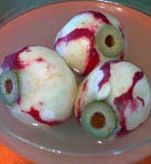
Although the tarsier was once more widespread, all the species living today are found on the islands of Southeast Asia. Each eyeball is approximately 16 mm in diameter and is as large as their entire brain

The most distinctive trait of the proboscis monkey is the male's large protruding nose. It has been suggested that the female proboscis monkey prefers big-nosed males[/align]





 [/align]